Bookkeeping Is Not Just for Tax Season
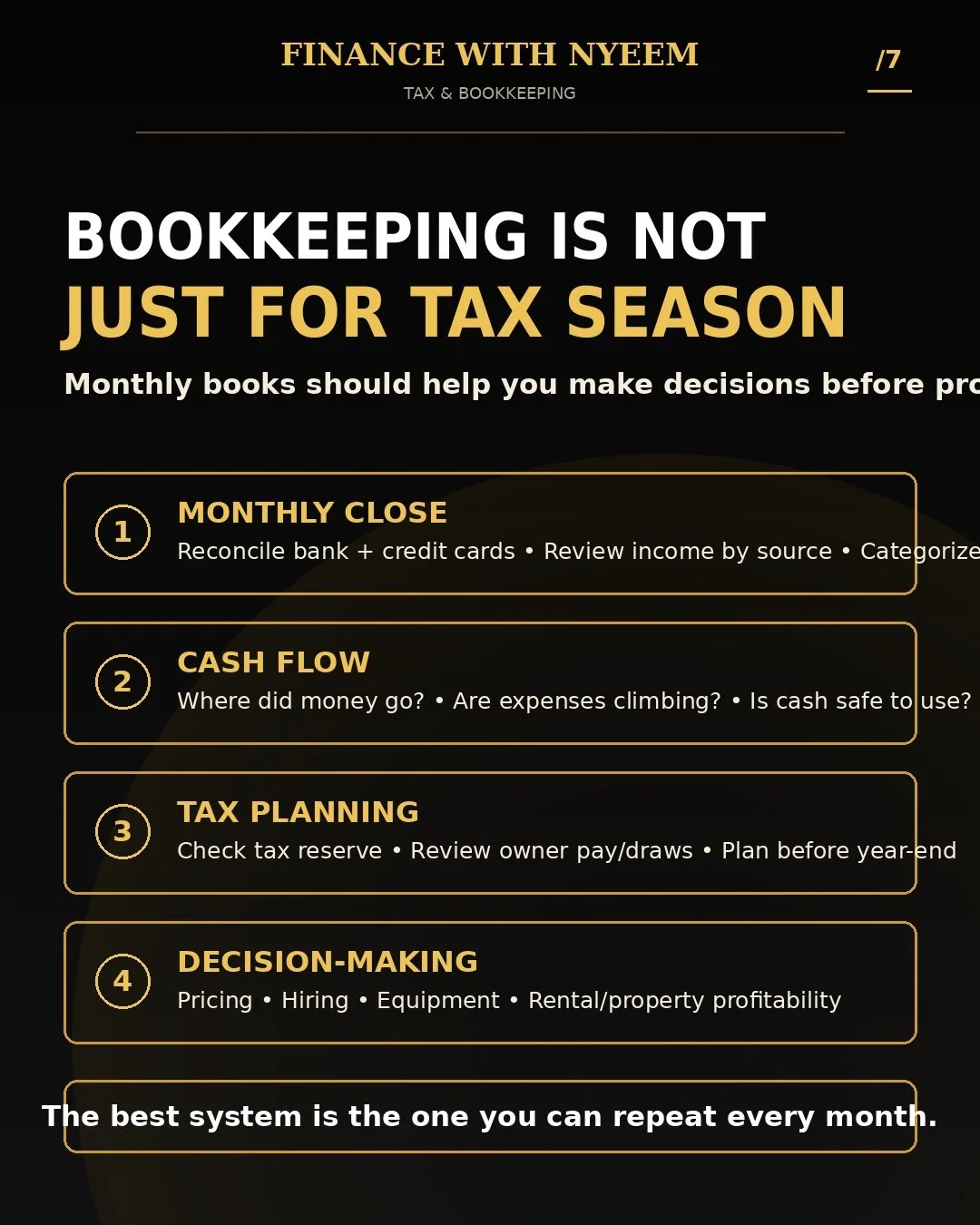
Monthly bookkeeping helps business owners understand profit, cash flow, owner pay, tax reserves, expenses, and planning before problems grow.
URL Slug: bookkeeping-not-just-tax-season
Bookkeeping is not just about getting a tax return filed.
That is the low-level version of bookkeeping.
The higher-level version is using the books to understand what is actually happening inside the business while there is still time to make decisions.
For Anchorage small business owners, rental owners, real estate agents, contractors, consultants, and self-employed professionals, monthly books should answer questions that matter before tax season:
What did the business actually earn?
Where is cash going?
Are expenses growing faster than income?
Are owner draws or payroll outpacing real profit?
Is enough money being set aside for taxes?
Are rentals, projects, or business lines actually profitable?
Can you make a decision with facts instead of guessing?
Waiting until March to clean up the prior year might help get a tax return filed, but it does not do much for today’s cash flow, pricing, owner pay, payroll decisions, equipment purchases, hiring decisions, rental planning, or tax reserves.
By then, the year is already over.
The monthly close matters
A practical bookkeeping rhythm does not need to be fancy.
But it does need to be consistent.
A monthly close should usually answer a few key questions:
Are the bank and credit card accounts reconciled?
Is income categorized correctly?
Are expenses coded in the right place?
Are owner draws, transfers, payroll, and reimbursements being handled correctly?
Is there a tax reserve?
Are there any unusual expenses or cash leaks?
Are receivables, payables, debt payments, assets, or depreciation items being tracked correctly?
This is where bookkeeping starts to become useful.
Not because the books look pretty.
Because the books tell you what is actually happening.
Cash in does not equal profit
One of the biggest mistakes business owners make is judging the business by deposits.
Cash came in, so the business must be doing well.
Not always.
A business might collect strong revenue and still have weak profit because expenses are growing too fast, debt payments are eating cash, owner draws are too high, payroll is too heavy, pricing is too low, or tax reserves are being ignored.
That is why monthly books matter.
The bank balance tells you what is there today.
The books help explain how it got there and whether it is safe to use.
Bookkeeping should support real decisions
Good bookkeeping should help a business owner make decisions like:
Can I afford to hire?
Should I buy equipment now or wait?
Are my expenses getting too high?
Should I adjust pricing?
Am I paying myself too much or too little?
Do I have enough set aside for taxes?
Is this rental property actually performing?
Is this business line profitable?
Should I review entity structure, payroll, or retirement planning?
Do I have clean records if I need financing, tax planning, or a cost segregation review?
That is very different from throwing receipts together once a year and hoping the tax return works out.
Why tax season bookkeeping is not enough
Tax season bookkeeping is backward-looking.
It tells you what happened after the year is already over.
Monthly bookkeeping gives you a chance to act before the problem gets bigger.
For example, if expenses are climbing faster than income in July, you still have time to fix it.
If tax reserves are low in August, you still have time to adjust.
If owner draws are too high compared to profit, you can catch it before year-end.
If rental expenses are being mixed together or not tracked by property, you can clean that up before it becomes a mess.
If payroll, reimbursements, assets, or depreciation items are being handled incorrectly, it is better to catch it monthly than during a deadline rush.
The best system is the one you can repeat
The best bookkeeping system is not always the most complicated one.
It is the one that gets done every month.
A repeatable monthly system might include:
Reconciled bank and credit card accounts
Clean income categories
Clean expense categories
Owner pay or draw review
Tax reserve review
Profit and loss review
Balance sheet review
Rental or project tracking
Asset and equipment tracking
Debt and loan tracking
A short monthly summary of what changed
That rhythm can prevent a lot of confusion later.
Bottom line
Bookkeeping is not just for tax season.
It is how a business owner turns transactions into decisions.
A tax return may tell you what happened last year, but monthly books help you make better choices right now.
Finance With Nyeem Tax & Bookkeeping helps Alaska business owners, rental owners, real estate agents, contractors, consultants, and self-employed professionals keep books organized and useful throughout the year.
The goal is not perfect books.
The goal is a system that still works when business gets busy.
General education only. Your tax situation may differ.
